Wednesday, July 19, 2017

Arcane Spells: Rasa Mon's Personal Spells, Level II


Rasa Mon's Personal Spells, Volume II


      Greetings friends, This series of posts will contains several spells I have created for a personal character I have played for 28 years. The character, Rasa Mon Fry, is an generalist Elf Mage of high level. He has focused much of his magical studies on plant based magics. I have played this character in many different settings and with many different DMs, needless to say he is well traveled.

      All of these spells are available to use in your campaigns, I only ask that you keep the "Rasa Mon's <blank>" titles. The character is one who will freely teach these spells to any wizard who would like to learn them. He can be summoned by a special amulet.

      If, as a DM, you feel that these spells would be harmful to the balance of your campaign, feel free to ignore any or all of them!

Second Level Arcane Spells List


Blossoms of Insidious Intent

Range: 30 yards
Components: V, S, M
Duration: 2d4 rounds, plus 1 round per level
Casting Time: 2
Area of Effect: 20 foot cube, plus 10 foot cube per level
Saving Throw: Special
Reversible: No

      By means of this spell the caster summons an overgrowth of oversize exotic looking flowering vines to appear in the Area of Effect. The flowers of these vines exude an overwhelmingly strong scent of rotting corpses causing those who are caught in the Area of Effect to Save vs. Spell or spend 1d4 rounds vomiting, after which they are affected as if nauseated. Those who make the save are nauseated and fight at a -2 penalty to Attack, Damage, and Armor Class while within the Area of Effect. Those creatures without an olfactory sense are immune to this spell, as are undead and others to whom the smell would not be offensive. The components of this spell are a rotted piece of meat and a flower which are eaten by the caster.

Conjure Plant I
Range: 30 yards
Components: V, S
Duration: Special
Casting Time: 2
Area of Effect: Special
Saving Throw: None
Reversible: No

     By means of this spell the wizard magically conjures 4d12 plants of a type determined by the DM. The plant conjured cannot be bigger than 6” tall and wider than 2” in diameter. The plant summoned cannot be magical in nature nor can it be an intelligent plant. Poisonous plants can be summoned with this spell. The plants summoned will stay in the summoned area, no greater than 10 square feet per level of the caster, until destroyed or dispelled. The caster's chance of getting the desired plant is 75% modified by nearby terrain up to +/- 15%. If they possess a sample of the desired plant, root or seed for example, that species can be summoned with 100% accuracy.

Counterspell
Range: 120 yards
Components: V, S
Duration: Instantaneous
Casting Time: 2
Area of Effect: 30 foot cube
Saving Throw: None
Reversible: No

     This is spell similar to the 3rd level spell, Dispel Magic. Except that it only works against one spell, cast within 1r of the completion of this spell. Either a spell cast the previous r or in the next r. This spell will also work against spell-like abilities. Scrolls, rod, staff & wand powers that use charges can be affected. This spell is not effective against other magics or items.

Rasa Mon's Hybridization
Range: 10 yards
Components: V, S, M
Duration: Instantaneous
Casting Time: 2
Area of Effect: 10 square yards
Saving Throw: None
Reversible: No

     By means of this spell the caster can cross two or more plants or fungi together (2 plants or fungi plus one per three levels) into a new plant with the desired traits from the original plants. For example, the caster can combine Bamboo and Snakewood in order to make a fast growing (Bamboo) breed of the hardest, densest wood (Snakewood) tree. This spell cannot affect intelligent or magical plants or fungi. The new plants are not magical and do not radiate magic. They will grow and reproduce as normal plants of the new type (as determined by the DM). The material components of this spell are the plants with which the caster wishes to hybridize.

Saturday, July 15, 2017

Races: Phytokinoesians, Part I Basics


Phytokinoesians

  Background

     Phytokinoesians can be broken into three groups: Lesser or Floral Servant; Phytokinoesian or Sylvane; Greater or Sylvani. The three groups vary in abilities and strengths. All of three of the groups of Phytokinoesians are non-sessile plants with a varying degree of intelligence. They are a younger race that has only been around for roughly five human generations (about 200 years). In that time they have been able to spread quietly throughout several differing terrains and climates.
     Their faith and mythology has only a few important personages. The four major gods of their pantheon are Ajyaxway the Green Spirit, Kerha the Smiling Mother, Jē a yōd'dhā the Reaper, and Sito the Crone. Each of these gods are associated with a different season and their holiest days coincides with the equinoxes and solstices. The other major god of their pantheon is the evil trickster god who had put them into slavery and servitude to the humans and elves. He is so feared that they do not name him in order to prevent his returning and to keep hidden from him.
     The Lesser Phytokinoesians are the least intelligent of the three. They do not speak but will understand the common tongue or elvish, depending on their background. They are generally skilled in a single physical job or trade. They lack sufficient intellect to do more than the job they were trained for.
     The Phytokinoesians, or Sylvane as they call themselves, are of more average intelligence. They are more varied in their skills and do their best to care for their less intelligent kin. A very few of the Sylvane are skilled in combat, as a species they would rather hide than fight. Those who are skilled warriors fight with guerrilla style tactics, mostly hit and run, to get opponents to move away from their homes. There are a few among them with arcane spell knowledge and a bit more of them are able to wield divine magics.
     The Greater Phytokinoesians, or Sylvani as they are called, are the most intelligent of the three. They are also the most magical. The Sylvani are the leaders, and the most dangerous warriors.
     Phytokinoesians do require water (1 gallon/week, 2 gallons if in the desert), air (can survive in space for short times), soil or mulch (3 lbs/week, 5 lbs if in tundra or colder temperature), and sufficient light (continual exposure of bright light for at least 4 hours daily, more if the light is dimmer) to continue to thrive.
     On a Spelljamming vessel they freshen the air of the ship just like other plants. For every Phytokinoesian on board the air supply of the ship is extended by 1 week/ton. So, for example, if a 10 ton vessel has 10 Phytokinoesians on board the air supply would be extended by a week. 20 Phytokinoesians would extend it by two weeks, etc. The maximum the air supply could be extended is one month.

Floral Servants

Floral Servants

      The Lesser Phytokinoesians, or Floral Servants as they are known by their former human masters, are plants of limited intelligence (Ability Score of 3) that can do tasks of only a few sentences long. They do not speak but can understand the language of their masters, mostly Common or Elvish, and will learn their names. They can be taught to fulfill a particular function with proficiency but then are no longer able to learn any other skill (a single Proficiency slot or Secondary Skill, at a skill check of 9).

     Most of the Floral Servants in existence are trained as household servants, laborers, or sailors. For the purposes of holding or carrying things they have a Strength of 15, for combat purposes their Strength is 9. They range in height from 4' 8" to 5'10" tall and weigh and average of 175 to 225 lbs.
     Floral Servants are without gender, though they do resemble humanoid males or females. They do not have flowering buds like the other Phytokinoesians and  do not reproduce. It has been theorized that there must be some magical method for their creation. They do vary in appearance enough to distinguish between individuals, with varying bark and leaf colors. Floral Servants are the only Phytokinoesians known to wear clothing. Generally they will wear the clothing appropriate to the tasks or functions they have been trained for and in the style chosen by their masters.
     Those Floral Servants that have been freed by their Sylvani brethren continue to work at the same jobs they were trained for as slaves, as they lack sufficient intelligence to learn new things.

Sylvane

Sylvane
  
     Phytokinoesians, or Sylvane as they call themselves, are plants of generally average intelligence (Ability Score of 9 to 13). They speak the language of their former masters (elvish or common) and any additional languages as the DM, or player, sees fit. All of their Ability Scores (Str, Dex, Con, Int, Wis, and Cha) range from 6 to 18. They range in height from 5' to 6' tall and weigh around 200 to 300 lbs. They do not wear clothing but will make use of backpacks, bags and belts or harnesses to carry things with them they may have need of.
     Phytokinoesians are able to blend into any natural surroundings and can only be seen with a true seeing or similar spell. They can speak with plants at will, Charm/Hold only effective if they can affect plants, and Psionic contact is at a -8 to the power score. They have a base AC of 8, due to their strong bark. It should be noted that their fists acts as clubs when it comes to combat (1d6 damage). Also, they have the ability to see up to 60' with Infravision.
     There are two genders of Phytokinoesian and though they are humanoid in appearance they are plants and reproduce as such. Their flowering buds are what allow them to reproduce and their humanoid appearance does not denote their actual gender. They also need a pollinating bird or insect to allow for reproduction. Once pollination has been completed the buds will close and fruit will form. Sylvane seeds need to be planted and their seedlings protected until they reach sapling age, roughly 1 year. Once the saplings uproot themselves they will continue to grow until they are mature Sylvane, roughly 4 years under ideal conditions.
     Sylvane culture is an interesting mix of Human and Elven cultures. Many of the Sylvane who worked on spelljamming and sea ships have taken to a swashbuckling/pirate culture and the Sylvane who were working for the elves have taken more to a quiet hidden existence all over areas that would surprise most. Such as alpine, tundra, swamp, steppe, and even scrub desert. Whereas the more domestic and rural Sylvane have become fierce defenders of grasssland, woodland, and timberline areas. Rumors have also been noted of Sylvane wandering the Outer, Transitive and Inner Planes though no confirmation has been made.


Sylvani

Sylvani
      Greater Phytokinoesians, or Sylvani as they call themselves,
are generally the leaders of the Sylvane and are far more aggressive in protecting their territories. They speak the language of their former masters (elvish or common) and any additional languages as the DM sees fit. All of their Ability Scores (Dex, Con, Int, Wis, and Cha) range from 13 to 18, except for Str, which ranges from 15 to 21. They range in height from 5' 6" to 7' tall and weigh around 225 to 350 lbs. They do not wear clothing but will make use of backpacks, bags and belts or harnesses to carry things with them they may have need of.
     Roughly 1 in 1,000 Sylvane born, mature into being a Sylvani. Sylvani do not reproduce, their seeds are sterile except as used for the use as described below. Since they do not reproduce on their own they are rare.
     They have all of the abilities of Sylvane, excepting that their base AC is 3 and their fists do 1d8 damage. Additionally, they can only be hit by a magic weapon of +1 or better (they can also hit a creature that requires a +1 magic weapon), control plants in a 20' radius at will & are immune to normal fire (+2 save vs magic fire, -1 per die of damage). Sylvani are also able to use the following spell-like abilities 2x Day*: Rasa Mon's Binding Seeds, Rasa Mon's Bladegrass, Rasa Mon's Deadly Kudzu (Heals 1d6 hp per round) & Rasa Mon's Deadly Roots as 13th level wizards and fight as 8th level warriors.

Kerha the Smiling Mother


* The spell descriptions for these abilities will be in a later post. Links will be added when the post goes live.

Wednesday, July 12, 2017

Arcane Spells: Rasa Mon's Personal Spells, Level I

Rasa Mon's Personal Spells, Volume I

     Greetings friends, This series of posts will contains several spells I have created for a personal character I have played for 28 years. The character, Rasa Mon Fry, is a generalist Elf Mage of high level. He has focused much of his magical studies on plant based magics. I have played this character in many different settings and with many different DMs, needless to say he is well traveled.
     All of these spells are available to use in your campaigns, I only ask that you keep the "Rasa Mon's <blank>" titles. The character is one who will freely teach these spells to any wizard who would like to learn them. He can be summoned by a special amulet.
     If, as a DM, you feel that these spells would be harmful to the balance of your campaign, feel free to ignore any or all of them and enjoy!

 First Level Arcane Spells List


Force Spike
Range: 60 yards, plus 10 yards per level
Components: V, S
Duration: Special
Casting Time: 1
Area of Effect: 1 or more spells, within a 10 foot cube
Saving Throw: Negates
Reversible: No

     Use of the Force Spike spell causes up to 5 missiles of magical energy that dart forth from the wizard's fingertip and unerringly strike their target. The target must be a spell or magical effect that is disrupted for 1d4+1 rounds. The disruption can be fixed by the caster of the spell or effect by concentrating on fixing the damage. Repairs take 1 round and total concentration (walking slowly is allowed). If it is not fixed then the spell or effect will resume after the duration expires. If the target of the disrupted spell or effect is no longer valid then it will fizzle away. The wizard gains an additional missile at 3rd, 5th, 7th and 9th levels. Force Spike is generally useless against instantaneous spell effects, but quite useful against permanent spell effects.

Mystical Anticipation
Range: 100 yards
Components: V, S
Duration: 1 round per level
Casting Time: 1
Area of Effect: 1 spell caster per 3 levels
Saving Throw: Negates
Reversible: Yes

     By means of this spell the caster is able to anticipate what his opponents next spell cast will be and when. The target of this spell is allowed a saving throw vs. Spells (Wis bonuses apply) to avoid the affects of this spell. Each time the target casts a spell the caster must make a new check. The caster then knows: What spell is being cast, its effects, target, casting time, (DM Discretion) duration and area of effect. The reverse of this spell confuses any such attempts to scrye on the target's spell casting. It does not keep spells such as ESP from working, unless the target begins casting a spell. Then the ESP would be affected. After the casting is through it would work normally again.


Rasa Mon's Bladegrass
Range: 10 yards, plus 10 yards per level
Components: V, S, M
Duration: 5 rounds, plus 1 round level
Casting Time: 2
Area of Effect: 10 square feet, plus 10 square feet level
Saving Throw: ½
Reversible: No


     This spell transforms the grass within the Area of Effect into very sharp grass with an effect like that of caltrops. Any creature that is caught within or crosses the area of effect must save vs spell or suffer 1d4 points of damage for every round they are within the effected area. Any creature that eats or otherwise touches the effected grass will suffer the damage as well. When the spell duration ends the grass goes back to normal. The caster can determine the shape of the effect as long as it does not exceed the limits of the spell. For example the caster can surround themselves with a circle of Bladegrass in order to deter charging opponents. The use of a Pass without Trace spell or similar effect negates the effects of this spell as does a dispel magic or similar spell. The components of this spell are a bit of fresh grass and a metal caltrop which is consumed by this spell.


Rasa Mon's Conjure Pipeweed
Range: 1 mile per level
Components: V, S
Duration: Instantaneous
Casting Time: 1
Area of Effect: 1 ounce
Saving Throw: None
Reversible: No

     When this spell is cast the wizard teleports pipeweed directly into his pipe. The pipeweed must be within spell range. The pipeweed, if any, that appears can be from a natural plant or farm or another person's pipe or possession and cannot exceed 1gp of value. No matter the source of the pipeweed it will always be lit when it appears in the casters pipe. Caution should be exercised with castings of this spell, for if the pipeweed comes from another person they will instantly know the general distance and direction of the caster.


Rasa Mon's Pollen Cloud
Range: 30 yards
Components: V, S, M
Duration: 2d4 rounds, plus 1 round per 2 levels
Casting Time: 1
Area of Effect: 10 feet, plus 5 feet per level
Saving Throw: ½
Reversible: No

     This spell causes plants within the area of effect to produce a large yellow cloud of pollen. Those within the Area of Effect must Save vs Spells or suffer a -4 Attack penalty due to watering of the eyes, coughing, and sneezing. The material component is pollen from a flower and the flowers or pollen producing plants within the Area of Effect (so rather useless in a barren desert, yet quite useful in a dense jungle).


Rasa Mon's Smoking Pipe
Range: 0
Components: S, M
Duration: Instantaneous
Casting Time: 1
Area of Effect: Cone, 5 feet long by 5 feet wide at the end
Saving Throw: Special
Reversible: No

     Upon casting this spell, the wizard breathes a cone of smoke. From one to six (1d6) creatures within the area are affected in order of increasing distance from the wizard. All creatures above the level of the spell caster and all those of 6th level or 6HD or more are entitled to a saving throw vs. spell. Creatures that do not breathe (or who have gills and such) are not affected by the spell. Creatures not allowed or failing saving throws, and whose HD or levels are less than or equal to the spell caster's level, are struck unconscious for 2d4r; those with HD or levels 1 or 2 greater than the wizard's level are left choking and unable to act for 1d4r; those with HD or levels 3 or more greater that that of the spell caster are left coughing and unable to act for one round. The material component of this spell is a lit and burning pipe which is extinguished by this spell, the pipe must be repacked and lit taking a full round to do so. This spell will not work underwater.


Rasa Mon's Sprouting Seeds
Range: 40 yards
Components: V, S, M
Duration: Special
Casting Time: 4
Area of Effect: 40 foot cube
Saving Throw: Negates
Reversible: No

     By means of this spell, the caster is able to cause seeds to grow into plants in the area of effect to entangle creatures within the area. The newly grown plants warp, twist, and entwine about creatures, holding them fast for 1 Turn. A creature that rolls a successful saving throw vs. spell escapes the entangling plants. Exceptionally large (gargantuan) or strong creatures may suffer little or no distress from this spell, at the DM's option, based on strength of the entangling plants. The plants grown from this spell are not dispelled after the entangling effects wear off as they are just regular plants that happen to be very twisted and warped looking! The material component is the seeds of the plants to be grown which must be thrown out into the area of effect.


Rasa Mon's Wildflowers
Range: 30 yards
Components: V, S
Duration: Special
Casting Time: 1
Area of Effect: 40 square feet
Saving Throw: Negates
Reversible: No

     This spell creates a horizontal wall of flowers. Those viewing the flowers must save vs spells or become fascinated by the flowers for 1d3 rounds, plus 1 round per level of the caster. Any creatures affected will stop combat or other activites to go into the wildflowers for the duration of the effect. The flowers created are permanent and will die without proper care. There is a 50% chance (-1% per level) of the caster being affected as well (no save allowed).


Touch of Flame
Range: 0
Components: V, S
Duration: 1 round per level
Casting Time: 1
Area of Effect: Caster's hands
Saving Throw: ½
Reversible: No

     The caster of this spell will have their hands burst into flames. On a successful to hit the victim must save vs spells or the caster can add 1d4+1 fire damage to his barehand attack & any flammable material must save vs magic fire or also catch fire. Those who succeed in the save suffer only ½ damage and flammable items do NOT need to save. While this spell is in effect the wizard cannot cast spells requiring material components (as they will be immolated by this spell). If the caster is wearing gloves or non-magical rings at the time of casting they will be destroyed by this spell, items on the caster's wrist are not affected. Magic items are allowed a save vs. magic fire to avoid destruction.


Sunday, July 9, 2017

NPCs: Zeno Elfslayer

     Zeno the Elf Slayer is an honorable opponent. Honorable, in the Minotaur sense of the word. When he faces an elf of equal or superior ability he will challenge them to honorable combat with a weapon of their choice. Since most elves choose to fight with a bow, a completely dishonorable weapon, or long sword he feels completely justified in using his own long sword of elf slaying.

     Once engaged in an honorable combat he will view any misconduct by his opponent's allies as an affront to his honor. This frees him from restricted combat and he will use any of his other weapons to fight, such as his nose ring of fire breathing. Honorable combat only ends when the Elf is killed or surrenders to him.
     If they do allow him to take them prisoner, he will, keep them safe from harm until he feels it is time to end their life. His current valet, Gelfunas, is an elf that has served him so well that he has not yet killed him. Gelfunas has seen many elves slain and eaten by Zeno. Still he fears, and respects, him enough to continue serving Zeno.


     A favored tactic of Zeno's is to antagonize a party with an elf in it into chasing him through a forested area to a pond, river or other body of water. He will then run across it to force the party to circumvent or go through it. Once the party is separated from each other he will run across the water again to either fight the group individually on land or, if they are swimming, run up and attack them from the surface. Sometimes he will also run into the area they are swimming, drop oil on that area and then use his nose ring to engulf the swimmers in flames.
     Zeno is a cunning and experienced hunter of elves. He is not above using potions of polymorph self to turn into an elf and then enter their cities to find the best prey. This tactic is usually reserved for those elves he could not get at otherwise. Such as high level warriors, nobles and kings.


Saturday, July 1, 2017

Adventure: The Warrens of Tribe Bloodhand Schwarzwald (2,000 XP)

This module is designed for use with the 2nd Edition AD&D™ game from TSR/WotC and contains references to trademarks and/or copyrighted material owned by that company. The original portions of this works are copyright © 2013 & 2017 by Satendra Marquis of BuzzkillMarquis Productions and is being offered free of charge under the following conditions:
You may not sell this material for your own profit.
If this material is redistributed, either electronically or in printed form, it must include this copyright notice.
You may modify details of this material for your own purposes, but only the original can be redistributed.

Note: This module was first posted to the Advanced Dungeons and Dragons 2nd Edition Google+ community for the June 2013 Adventures competition. The community can be found at this link: 

Background


    This adventure is designed for 3 to 5 players with characters ranging from 1st to 3rd level, for a total of 3 to 15 levels. It is set in the world of Xaqi (cha-shí), on the Aegean Continent in the Republic of Ralifon. The city of Qidron (shi-drón), is composed of several walled cities connected by dimensional gates. These gates allow near instantaneous travel from one side of the Republic to the other. Each Province (as the walled cities and surrounding areas are known) have roads leading from them to other important religious, military or trade locations. In the Province of Danue (dan-wee), 6 days travel north of Qidron, lies the hamlet of Xardon (chardón). It is bordered on the North and West by the River Halqen (hal-shén). To the north and east lie the Mountains of Weydaan. The southern areas of the hamlet contain many family farms. The far side of the river is the Schwarzwald, a dense forest of hardwood trees. A stonework bridge crosses the river allowing access to the forest. There is a stonework road going through the hamlet from the south into the forest, it ends in the Mountains of Weydaan at the Abbey of Erron's Tears.
    Very few people go into the Schwarzwald, as it is a dangerous place. The hunters, as well as lumbermen who fell trees, take care not to be caught there after sunset. Pilgrims on their way to the Abbey take care to leave Xardon at sunrise and move swiftly to the Abbey on horseback so as to reach the Abbey by sunset at full Canter, 27 movement rate, during late Spring or early Autumn. The forest is known to be home to dire wolves and orcs. It is also said that the spirits of lost travelers will haunt those that stay after sunset. Wild goblins will occasionally trade cheeses (goblins are the only race who know how to make cheeses. They can make cheese that has magical properties, effects as per potion of the same type) to the hamlet in exchange for needed goods (rope, finished lumber, textiles, flour, mining tools, etc).

Overview


    The Abbey has sent out a call for adventurers to assist them with wild goblins who have been raiding their livestock. Normally, Erronites would not need adventurers to assist them (Erron of Solitude is the goddess of vengeance), except this sect is a non-violent group of cartographers bound by oath to harm no living creature.
    Recently the local wild goblin tribe, Bloodhand Schwarzwald, have had their warrens overtaken by undead. Their remaining goblin warriors are escorting a group of 100 goblin women and children away from the recently abandoned warren. If the PCs attack and kill the goblins they do NOT get the Adventure XP for this planned encounter nor do they receive any XP for the goblin warriors.  They can still get the XP for the undead should they clear out the lair.  Also, goblin survivors will raise an attack group of 3d10x10 goblin warriors to find them in 1d4 months. Players of Good alignment should be awarded bonus XP for not taking any of the treasure in the goblin warren. DM adjudication is advised as to how large a reward the goblins will give the PCs for clearing out the undead. A good guideline would be a Cheese Wheel Potion for each PC and 3d6 bronze pieces. The Abbey will also give the PCs a reward of one Map of the Danue Province (worth 25 electrum pieces) in a bone map case (worth 125 silver pieces). The bones of the giant skeleton are worth 25 gold pieces to the right alchemist.

Planned NPC Encounters


12 Wild Goblin Warriors
XP Value: 15    Align: LE
HD: 1-1            HP: 5
Att: 1r              Morale: Average (10) or Fearless (20)
BP: 13              2 Cheese Wheel of Healing

A/C:    Arm    THAC0: 20    Armour    Wgt    AC-    Dex
10         6                             Hide        30      -4        0

Weapons         Wgt    Size    Type    Speed    Dmg S-M/L
Short Sword      3        S         P            3         1d6/1d8

30 Skeletons
XP Value: 65    Align: N
HD: 1               HP: 8
Att: 1r              Morale: Special

A/C: 7        THAC0: 19

Weapons                Wgt    Size    Type    Speed    Dmg S-M/L
Rusty Longsword      4        M         S           5        1d8/1d12

15 Zombies
XP Value: 65    Align: N
HD: 2               HP: 16
Att: 1r              Morale: Special

A/C: 8        THAC0:    19

Weapons    Wgt    Size    Type    Speed    Dmg S-M/L
Claw             -         -          -            0         1d8/1d8

4 Bugbear Skeletons
XP Value: 650    Align: N
HD: 6                 HP: 24
Att: 1r                Morale: Special

A/C: 6        THAC0: 15

Weapons          Wgt    Size    Type    Speed    Dmg S-M/L
Morning Star    12       M        B           7          2d4/1d6+1

Giant Skeleton
XP Value: 975    Align: N
HD: 4+4            HP: 25
Att: 1r                Morale: Fearless (20)

A/C: 4        THAC0: 15

Weapons                     Wgt    Size    Type    Speed     Dmg S-M/L
Fireball (1/6T)              -          -         -             3              8d6
Great Club +1,            12       M        B            7      2d4/1d6+1 (+3)
 Headcrusher

Random Forest Encounters


4 Dire Wolves                                        
XP Value: 17     Align: N                      
HD: 4+4           HP: 20                         
Att: 1r               Morale: Average (10) 
A/C: 6               THAC0: 15                  
Move: 18          Dmg: 2d4                    

Old Man Zachary 
XP Value: 0    Align: NG
HD: 0             HP: 0
Att: 1r            Morale: Fearless (20)
A/C: -10         THAC0: 0
Move: 36       Special Attack: Sonic Attack

6 Orc Hunters
XP Value: 15    Align: LE
HD: 1               HP: 8
Att: 1               Morale: Steady (12)

A/C: 8        THAC0: 19

Weapons    Wgt    Size    Type    Speed             Dmg S-M/L   
3 Spear        5        M        P            6                  1d6/1d8        
2-Handed     -          -          -             -        1d8+1/2d6 (2x Charged)
Knife           ½        S        P/S          2                 1d3/1d2        

Weapon Ranges    ROF    S    M (-2)    L (-5)
Spear                      1r      1        2          3
Knife                       2r      1        2          3
CP: 5    Leather Armour  Waterskin            Tooth & Bone Necklace (5 cp)
BP: 6    Knife Scabbard   Spirit Pouch         Fetish Trinket (1 cp)
SP: 2    Leather Belt        1 Wolf Pelt (5 bp)

The Hamlet of Xardon


    When the party arrives at Xardon on the road from the south they will pass by large vineyards of white grapes. Xardon is known in the Republic as an excellent area for white wines. Once past the vineyards they will pass the smaller family farms of the hamlet proper and finally the town center. The mill, two wineries and the blacksmith's forge are the only buildings in the hamlet not made entirely of the sturdy wood from the Schwarzwald.
    From the vantage point of the stone bridge that crosses the river Halqen the forest looks dark and ominous. From the river bank out about 100 yards from the bridge has obviously been cleared of trees in a semi-circle. To the east of the bridge is a large corral and stable of fine looking steeds. A mount can be rented from the stable for 2 days at a cost of 1electrum piece with a required deposit of 1 gold piece that will be refunded after the steed is returned in good health. Adventuring tools can be purchased at the smithy, excluding weapons. Provisions can be purchased from the miller and wines from wineries (25 silver pieces per bottle).
    Should they start the trip to the Abbey any time from one hour after sunrise, they will encounter a group of lumbermen at the forest edge. The foreman will advise them not to go this late in the day, then tell them the tale of old man Zachary. He was lost in the forest at night and was attacked by angry spirits of the dead. When found the next day his dessicated corpse made everyone frightened of being caught in the forest after sunset.
    Should the party continue they will encounter the spirit of old man Zachary, once the sun has set. He will beseech them to help him find his way home. If they agree to escort him back to the hamlet he will follow and not attack them.  If they go and visit his grave after escorting his spirit home there will be a ring on the grave. It is made of gold and has a single small sapphire in it (100 gold piece value & up to the DM whether it is magical or not).
    Should they say nothing, draw weapons, attack or refuse he will let out a moan of agony and the party members must save vs Death Magic to avoid passing out (6 round duration) from fright. Those that do save are affected as per the Fear spell for 6 rounds after which time his spirit will fade back into the forest.

The Abbey of Erron's Tears


    Once the party arrives at the other side of the Schwarzwald they will see the Abbey on a bluff above them. A waterfall cascades down the bluff at the northern edge of the Abbey grounds and a wheelhouse can be seen right along the water’s edge. The Abbey proper is a large stone fortification with a steep switchback trail leading to it. At the base of the bluff there is a pool of water with a black stone arch. The area below the bluff has been cleared of trees and brush for about 150 yards in an arc from pool to road. There is a stone stable built up against the rock face and a stone fence along the edge of the forest. The grass within the pasture is a healthy green. It appears there used to be more than just the two grazing cows. From pool side, if the party inspects the arch, they will see that water is going down an inclined stone sluice. From the other side of the arch only water is seen. With an Intelligence check the PCs will realize that the water is being gated to the Qidron waterworks.
    Once the party has a chance to take in the view a priest, Brother Lucas, will approach them and offer to stable their steeds. After they dismount he advises them to climb to the Abbey proper while there is still some daylight left (it will be around an hour from sunset if they left at the proper time). If it is after sunset he will house them with him in the stable house. There he can offer a hot meal of vegetable stew, a glass of wine and a straw mat to sleep on. If they can make the climb to the Abbey they will get a hot meal of vegetable stew, a glass of wine and a down stuffed bed on which to sleep.
    In the morning they will be summoned to the chamber of the Abbot. Abbot Richemond will offer them a simple breakfast of bread, cheese, butter and milk. After he has eaten and the party finishes their food he will explain why he summoned them. “A fortnight ago we had eighteen cows. As you saw for yourselves we now have but two. Over the last week alone we lost five to the goblins. Normally, we have no quarrel with them. We want you to find them and recover our cows.”
    He will offer to pay them 10 silver pieces each. PCs who wish to haggle will get up to 20 silver pieces each, but at the conclusion of the adventure he will not offer them the map and scroll case mentioned earlier. Once payment assurances are made the heroes will be allowed to travel through the woods to find the goblins. Unless they take any rented horses with them they will be sent back to Xardon. PCs with Tracking proficiency can easily follow the trail of the goblins for 1 mile from the Abbey. Beyond that they will need to check every hour to avoid losing the trail and having to backtrack. A critical failure means they follow a trail which leads them back to the Abbey. They should still check to keep that trail with a second critical failure, meaning they are hopelessly lost and will find the road in 1d3 hours of searching. After the party successfully makes 6 checks they will encounter the goblins.
    Should the party travel at night through the forest they will hear the snarls and howls of wolves with all sorts of strange noises coming from just outside their field of vision, if the DM wishes, have them encounter an orc hunting party or pack of dire wolves. 

 The Bloodhand Schwarzwald


   If the PCs do not take care to be stealthy they will be ambushed by the twelve goblin warriors. At which time the goblins will ask the party to surrender their weapons. The goblins will not attempt to kill the party, just subdue them if they take hostile action. Their Morale in this encounter is considered to be 20 due to the large group of helpless women and children they are protecting.
    If the PCs are stealthy they will avoid the goblin warriors and instead get to the goblin encampment of about a hundred women and children. The children will flee from the party and the women will cower. 3 rounds after the party makes their presence known the goblin warriors will return.
    All of the cows stolen from the Abbey are present, one is being milked and the rest are happily chewing grass. The warriors will not return the cows unless the PCs agree to clear out the goblin warren. When they return to the encampment with proof of the undead being slain, the goblins will allow the party to have the cows.

The Goblin Warren


    Encounters with undead should consist of two skeletons and one zombie per PC. The DM will need to keep track of how many have fallen to the party. When they reach the throne room (area 5) the party will face the bugbear skeletons and giant skeleton. The giant skeleton will use his Fireball on the party once he reaches ½ his normal hp or all of the bugbear skeletons are defeated.
    The goblin warren is booby trapped with 4d6 traps at random locations that the goblins will not reveal to the PCs.  There will be any of the following: Cave-in trap, Spiked pit trap, Spiked spring trap or Mud slide trap.  Should the DM want to add another more devious trap they are welcome to do so. Any traps encountered have a 1 in 3 chance of having been tripped by the undead. In which case the group will find 2d4 skeletons and 1d4 zombies lying dead in the area. If the DM thinks that the adventurers are having too easy a time the undead in these areas can be still active.
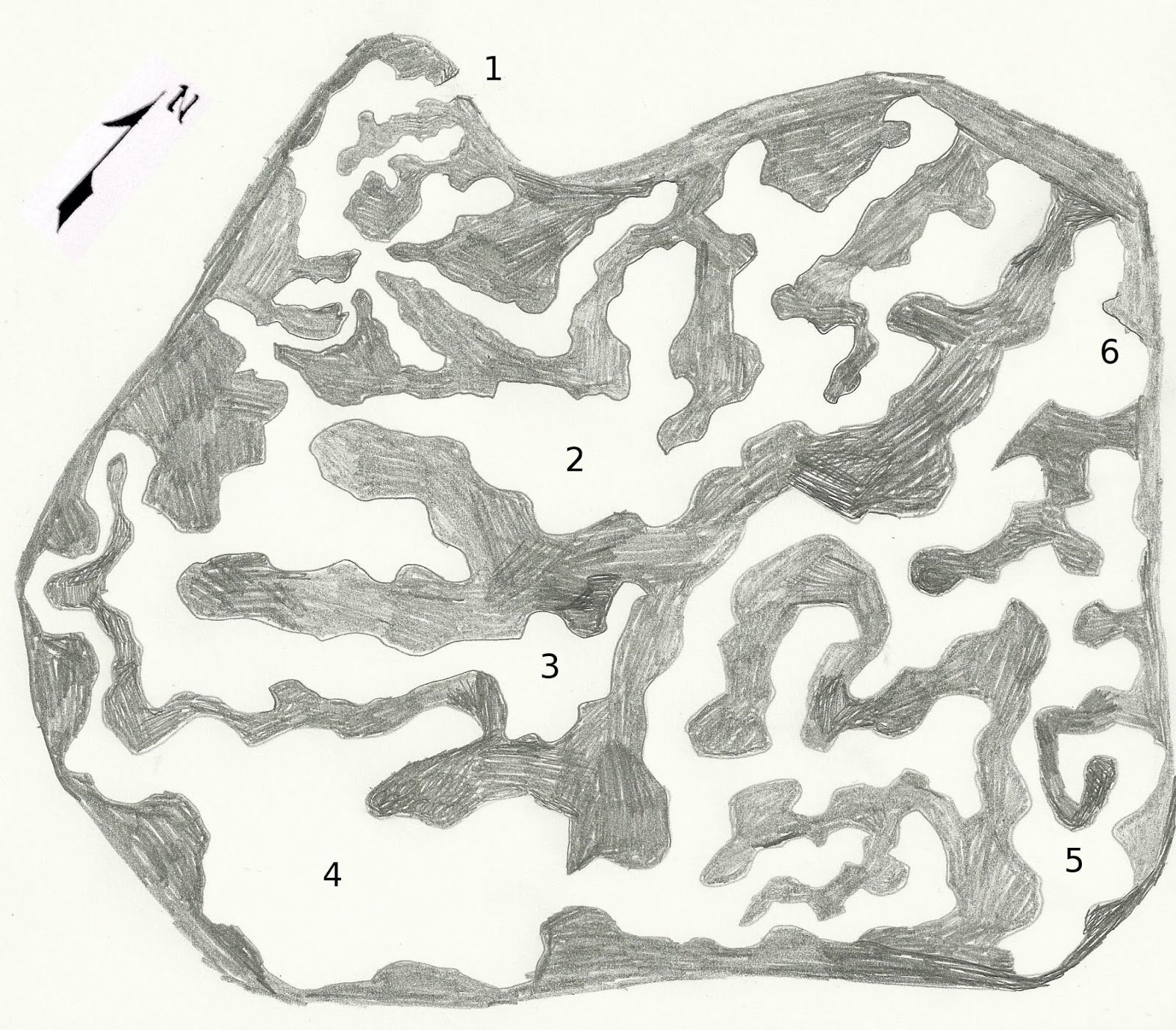
Warrens of the Bloodhand Schwarzwald
    Once the party kills the undead they must bring the Great Club Headcrusher (from area 6) back to the encampment and give it to the goblins. The goblins will then take their families home to verify it is safe, then let the party have the cows.

    1) Cave Entrance. The warren entrance is normally concealed by vegetation and has three newly abandoned outlook posts in nearby trees. Beyond shredded vegetation at the entrance there are thirty skeleton remains, a dozen zombie corpses each and fifteen goblin corpses. Some of the zombies are still attached to the three recently tripped spiked spring traps.

    2) This series of passages is an area where the goblins grow several varieties of fungus. It is warm, humid and has a hot spring deep in the back of the northern passage. Any of the monstrous types of fungus have already been slain by zombies, their corpses litter the area.

    3) This passage has an altar to the god Berrish. It is a grotesque affair with the snarling visage of an overlarge goblin with four arms, two of which end in three fingered tentacles holding a wheel of cheese. The altar is stained with the blood of innumerable sacrifices. The idol is emanating waves of humid heat. There are mushrooms all around the altar and several heads of small animals. The ruby eyes of the altar are the only light source which creates an atmosphere of dread in anyone not of Evil alignment. If the PCs disturb the altar or try to steal the ruby eyes they will be stopped by an overwhelming dread that drives them away from the altar (no Save allowed). There are no undead in this area.

    4) This portion of the warren is a large central area where special underground species of cows and goats would normally graze. Due to the influx of the undead the livestock are dead. Strewn around their corpses are the goblin herders who protected them and several slain undead.

    5) This passage houses the finished cheeses of the Bloodhand Schwarzwald. The cheese wheels are labeled, anyone who can read Goblin or on a successful Read Languages roll will know what they are. In the back of the cavern there is a floor to ceiling pile of rubble that used to be an exit. The tribe's wealth is also stored in this area.

9,000 copper pieces  7 Cheese of Healing              4 Large Chest
2,000 bronze pieces  3 Cheese of Extra-Healing    4 Good Dwarfish Lock

    6) This is the throne room, it is where the final battle takes place. Once the party has entered the throne room a portcullis will drop behind them and will not let them out until they are in possession of Headcrusher and can find the hidden release mechanism. The throne has 1 large poor quality Bloodstone worth 63 gold pieces.

Summary


    Once the party returns the cows they will get their reward from the Abbot and are free to go back to Qidron to spend their money. If the party has not run into Old Man Zachary on their way to the Abbey have them run into him on their way out (again if it is during the night). For observant or curious PCs all of the skeletons and zombies were created from orc corpses. With research, or a knowledgeable PC, they can learn that it requires strong magics to make giant skeletons. Some PCs will want to investigate who made and sent the undead in the first place!

Saturday, June 24, 2017

Artifacts: The Baton of Toscanini

The Baton of Toscanini

Within this small wand-like device hides a great power. If there are fewer than five musical instruments no magic emanates from the baton. When it is within the presence of at least five musical instruments (there is no upper limit to the number of instruments or musicians the baton can affect) the powers of the baton of Toscanini activate. If there are any creatures about with the ability to play the instruments present the baton will compel them to pick the instruments up and play them at the wielder’s commands, given by waving the baton about. Ability to play the instruments is defined as having appendages and/or orifices that can manipulate the instruments in the proper manner.

The main powers of the Baton of Toscanini are to compel musicians to play music that the wielder chooses them to play. The wielder need not have any musical proficiency or knowledge, the baton provides them skill. The victims also need not have musical proficiency as the actions of the batons wielder gives them the commands to follow and they are performed with perfect acumen. The baton also causes all creatures able to see or hear the music to stop any activity they were performing, to then listen and watch the musicians and conductor until performance is completed. The performance can be as short or long as the owner chooses, usually defined as 5 rounds to an hour (DMs discretion).

Anyone commanded by the baton of Toscanini is allowed a saving throw vs. Wand to resist. This save is modified by the following: If the victim has proficiency with musical instruments of any kind they save at a -1 penalty; If the victim has proficiency with any of the available musical instruments they save at a -4 penalty; If the victim is a Bard they save at an additional -4 penalty. Wisdom score bonuses will apply to the saving throw. If the victim is an Elf (non-Drow) they must make a magic resistance roll versus the wand’s charm, but it is reversed. Meaning that they are only 10% resistant to the Baton of Toscanini. Additionally, their saving throw is at an additional -4 penalty to those listed above. Any other fey creatures will have an additional -2 penalty (pixies, satyr, centaur, etc.). Any creature that saves must make an additional saving throw each round they are within range (1 yard per HD or level of the wielder, doubled if they already posses a musical proficiency) of the baton’s wielder.

Those who are within the range of the musical effects are also allowed a saving throw vs. Wands. Those with musical knowledge (i.e. proficiencies in singing, chanting, instruments, etc.) save at a -2 penalty. Bards save at an additional -4 penalty. Also, elfen and fey creatures save as per those commanded to perform. Wisdom bonuses still apply to the saving throw. The saving throw must be made every round that the creatures are within range of the music (as defined by the DM). all those that fail the save will completely stop other activities to watch and listen, this includes combat. If the PCs wish to have their characters do something that is not disruptive of the performance, such as dancing or singing, then other NPCs may follow suit.

The baton of Toscanini does affect undead as well as living creatures. As long as the undead has the ability to see or hear it will be affected. Undead save at their HD and are still beholden to the above modifiers to the saving throw.

When the performance is completed, the magic of the baton releases those affected by it, it will become inactive again for at least a day. The baton has other abilities as well. When it becomes active the wielder can choose to have the music effect the audience with any emotion that can be conveyed through music. This effect will continue for 2d4 hours after the performance ends. The affected creatures will act accordingly to the prevalent emotion conveyed.

So, for example, the wielder wants to convey a sense of solemnity and peace to a group of goblins that were attacking before the performance. The goblins failed their save and observed the performance and then afterwards would feel overwhelming peace and solemnity. At which point the DM decides their actions, goblins being LE creatures would likely just return to their warrens without continuing the attack.

The Baton of Toscanini cannot be destroyed by any normal means, it is also completely immune to fire, acid, lightning and disintegration. Wish and similar like abilities cannot destroy it but will cause it to disappear and be sent to another place on the same plane of existence.

The baton is intelligent but does not speak any language other than that of music. It is not given an intelligence score as its mind is too alien to be defined by that measure. The baton’s alignment is best defined as Neutral, also due to its alien mind. The baton does not control the owner in the same manner that it compels the musicians and audience. It merely releases the potential within the wielder and gives it musical form. Should the DM decide to have the Baton of Toscanini leave the current owner it will just teleport itself to another location, it is intelligent after all.

Friday, January 3, 2014

Relics: The Hypnopaedia or Book of Dreams

This book is the last remnant of power left in this world by the god Hypnos, Lord of Dreams.  It allows the possessor to enter and control the dreams of anyone that the user wishes.  It will also allow the user to learn or view things they could not learn in other ways.

Sleep
The Hypnopaedia can cause any creature to fall asleep at the possessors command, as long as they are in view (including views through scrying, crystal balls and the like) and they possess the book.  There is no saving throw allowed and this bypasses all magical resistance (even if protected by spells such as anti-magic shell).  This will affect even undead, magical and summoned creatures, even if they would normally be immune to sleep spells or effects.  The only exception to this is, attempts to use the book to affect Hypnos.

Possession
Its power is such that the user can trap someone in eternal dreaming and then control that person's body.  There is no saving throw allowed when the user takes over another person.  The user's own body will lie in suspended animation until they relinquish control of the victim's body.  If the user is slain while controlling another the user must make a System Shock roll or their spirit will be eternally lost in the Dreamlands.  If they succeed then the possessed body becomes theirs.  The new body does not ever sleep (even magically induced sleep) and will suffer Strength, Dexterity and Constitution loss (at DM discretion) and will eventually die in 1d4 Weeks.  If the Hypnopaedia can be regained then the user can rest normally as long as they possess and continue to use the book for this purpose.

Knowing
The true power of the Hypnopaedia is that it allows a sleeper to gain knowledge and see things normally unseen and remember them.  Should this power be utilized the user can learn a new proficiency or increase a thieves skill or learn a new prayer/spell, etc. in one weeks time of using the book.

Seeing
To see the unseen the user has to take a Dream Quest in which they can travel to any time or any place.  Thus allowing them to view events that have unfolded or will unfold.  Granted the view of these events will be somewhat obscured by dream logic, as the view is from the Dreamlands.  Therefore there is a 75% chance that events viewed are interpreted incorrectly by the user (modified by Wisdom, if the user gets a bonus of +1 to Mind Effects they are granted a -10% bonus, +2 a -20% bonus, etc. to correctly interpret the viewing).

Dangers
The drawbacks of using the Hypnopaedia is that the more it is used, the more sleep that is needed.  For every use of the Hypnopaedia the user requires a cumulative 1% more rest each night.  When the user reaches 100% they cannot awaken from sleep without the use of the book.  This means that if the book is stolen from them while asleep they are forever trapped in the Dreamlands, unless they can somehow regain physical use of the book. Should they lose possession of the Hypnopaedia while awake they will be unable to sleep until the book is regained or they die of exhaustion as per the Possession drawback.

The Hypnopaedia
Appearance
When found, the Hypnopaedia will be resting on a Titan sized bed. A stone pillow will have a large metal bound book upon it. The locking mechanism is of the finest craftsmanship. Within the golden gilt edge pages are embossed indecipherable glyphs. If more than a few of the pages (2d4) are viewed everyone within a 50' radius will be absorbed into the book and it will lock itself again. This trap only absorbs living beings and not their clothing or equipment.
To avoid this false Hypnopaedia will require a Religion proficiency check at a -8 penalty or a Wisdom check at -10, as the true Hypnopaedia is the stone pillow. Spells like Detect Magic, Identify, Legend Lore and such, are useless in identifying the Hypnopaedia as it appears to be but a stone.